Using Sculpture and Bodies as Weapons for the Civil Rights Movement
The Civil Rights Movement during the 1950s to 1960s saw one of the most powerful fights for freedom that the world has ever seen. The protest for racial equality became a playground for artists to use their visual talents to communicate activism. Art became a weapon to try and make a change within reality for everyone to live as equal.
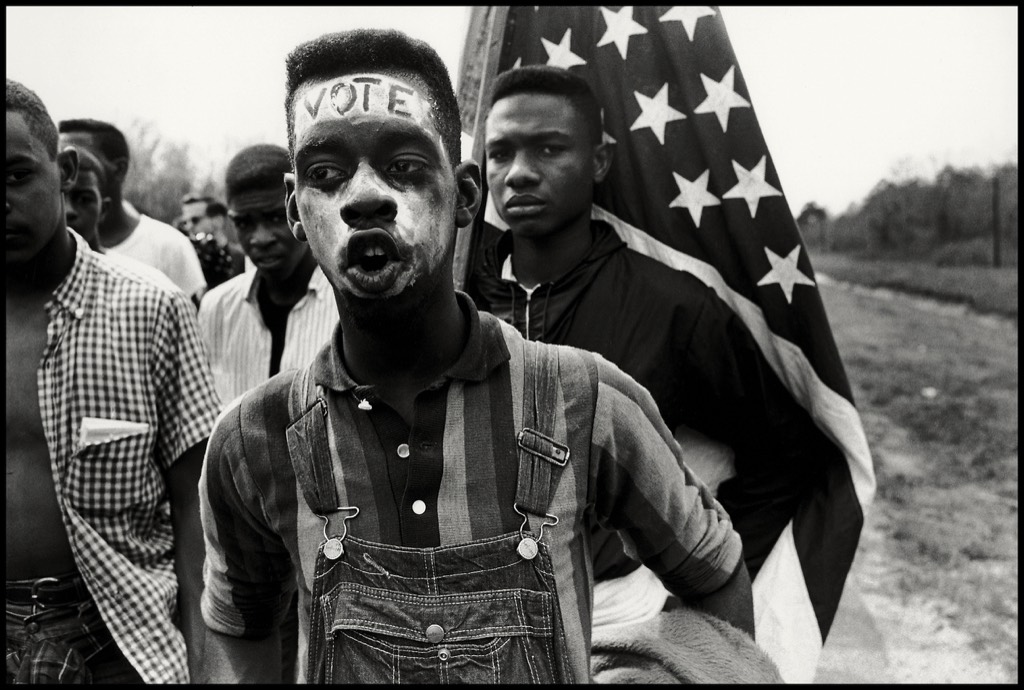
The Tate’s Exhibition: Soul of a Nation explores the power of African American art in context of the Civil Rights Movement. The face of the Tate’s Exhibition, Soul of a Nation, Catlett’s wooden sculpture of a fist named, Black Unity, 1968, captures her experience as an African-American during the movement. Being a sculpture, Catlett provides a 360 degree view of a piece of work. As you walk around the sculpture two faces appear, which I feel represent the people that struggle behind these fighting fists. Their expression of closed eyes also embodies how African-Americans had to use their determination, talent and hands to fight – as their faces were ignored.
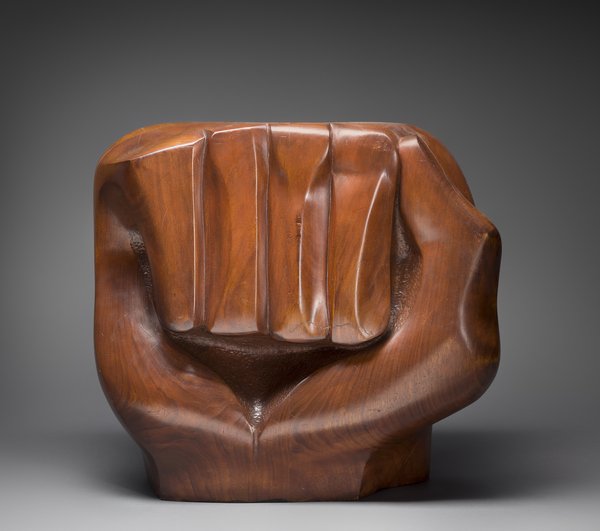
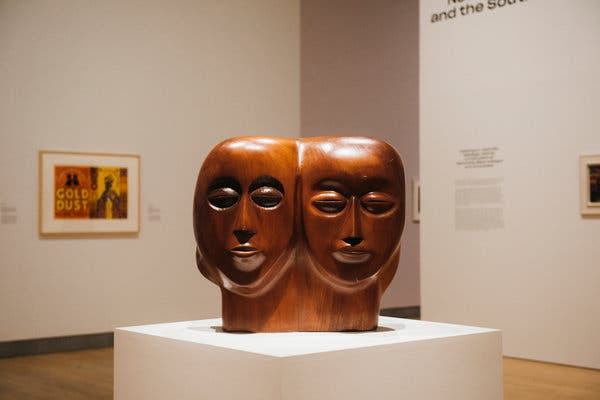
At a first glance, the clenched fist embodies the power and determination of the African-American community during times of inequality and deprivation of human rights. However, there is also a sense of anger and frustration towards this inequality.
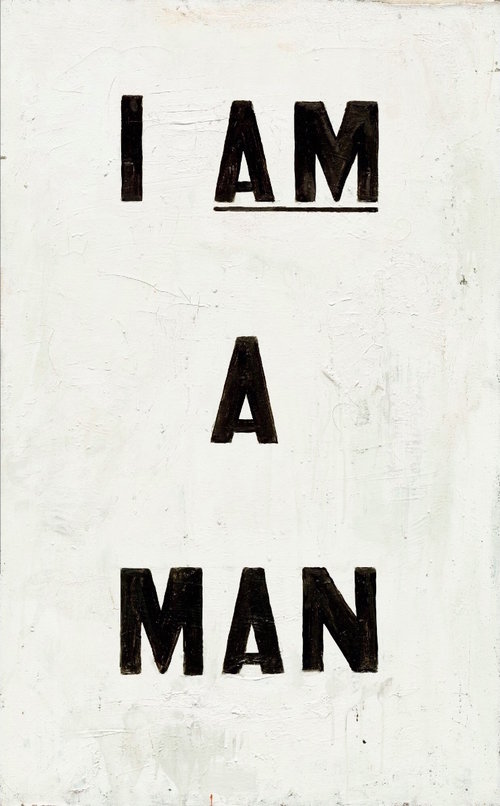
A variety of artwork was created for protest during the Civil Rights Movement as a vehicle to challenge society’s discrimination. As a contrast to Catlett’s inanimate media of sculpture, I was also fascinated to research other creative protest during 1968, where in Tennessee, the Sanitation Workers Strike saw African-American workers wear cardboard signs stating “I am a Man” (Weathersbee, n.d.). Using their own bodies as their sculptures, the workers simple slogan of “I am a Man” is so simple, so simply argued with society’s idea that your skin colour shattered your gender status. Walking through the streets, the volume of workers participating in the protest became a highly poignant moment for the Civil Rights Movement.
Returning to Catlett, I particularly like a quote where she states “it might not win prizes and it might not get into museums, but we ought to stop thinking that way […] stop thinking we have to do art for other people” (Lewis, Coleman and Hewitt, 2006). I love the organic nature behind Catlett’s work who is so obviously making art for her own voice and her own fight to speak during the Civil Rights Movement.
Main Organisations
Student Nonviolent Coordinating Committee (SNCC)
Congress of Racial Equality (CORE)
National Association for the Advancement of Colored People (NAACP)
Modern Organisations
Black Lives Matter: http://blacklivesmatter.com
NAACP: https://www.naacp.org
Media To Watch
Netflix TV Series: Who Killed Malcom X?
To Kill a Mockingbird: Book & film
Theatre Production: https://www.tokillamockingbird.co.uk/?utm_source=google&utm_medium=search&gclid=Cj0KCQiA04XxBRD5ARIsAGFygj_NsXoOMt6ZVqpp0zrMuKmonnfnHcHyg3_FRJ8d-O_WGk-wHzJCUN0aApzuEALw_wcB
Bibliography
Anon, The Art Institute of Chicago. 2020. Civil Rights Congress | The Art Institute Of Chicago. [online] Available at: <https://www.artic.edu/artworks/184340/civil-rights-congress> [Accessed 5 March 2020].
Anon, The Commercial Appeal, 2008. Memphis Sanitation Workers Remember The 1968 Strike, 40 Years Later. [image] Available at: <https://www.youtube.com/watch?v=V-N3OoHQq5o> [Accessed 5 March 2020].
Cotter, H., 2014. Battle Lines For Change. [online] Nytimes.com. Available at: <https://www.nytimes.com/2014/03/21/arts/design/witness-art-and-civil-rights-in-the-sixties-at-the-brooklyn-museum.html> [Accessed 5 March 2020].
Ellis-Petersen, H., 2017. Tate Modern Celebrates Work Of Black Artists From Civil Rights Movement. [online] the Guardian. Available at: <https://www.theguardian.com/artanddesign/2017/jul/11/tate-modern-celebrates-work-of-black-artists-from-civil-rights-movement> [Accessed 5 March 2020].
HuntleyFilmArchives, 2020. Civil Rights ‘I Am A Man’, 1968. Archive Film 91192. [image] Available at: <https://www.youtube.com/watch?v=V-N3OoHQq5o> [Accessed 5 March 2020].
Lewis, S., Coleman, F. and Hewitt, M., 2006. African American Art And Artists. Berkeley: University of California Press, p.135.
Lewis, F., 2014. Four Organizations Of The Civil Rights Movement. [online] ThoughtCo. Available at: <https://www.thoughtco.com/organizations-of-the-civil-rights-movement-45363> [Accessed 6 Match 2020].
Macdonald, F., 2017. How Bruce Davidson’S Civil Rights Photos Still Resonate Now. [online] Bbc.com. Available at: <http://www.bbc.com/culture/story/20171123-how-bruce-davidsons-civil-rights-photos-still-resonate-now> [Accessed 6 March 2020].
Reed, T., 2005. The Art Of Protest : Culture And Activism From The Civil Rights Movement To The Streets Of Seattle. University of Minnesota Press.
Tate. 2017. Soul Of A Nation: Art In The Age Of Black Power – Exhibition At Tate Modern | Tate. [online] Available at: <https://www.tate.org.uk/whats-on/tate-modern/exhibition/soul-nation-art-age-black-power> [Accessed 7 March 2020].
Visionary Project, 2010. Elizabeth Catlett : My Advice To Young African Americans. [image] Available at: <https://www.youtube.com/watch?v=EAl9xr5dbx8&t=19s> [Accessed 6 March 2020].
Weathersbee, T., n.d. One Night On The Mountaintop — THE BITTER SOUTHERNER. [online] THE BITTER SOUTHERNER. Available at: <https://bittersoutherner.com/one-night-on-the-mountaintop-martin-luther-king-assassination-anniversary> [Accessed 5 March 2020].
 Hattie Abbott : SAB935 Creative Dissent